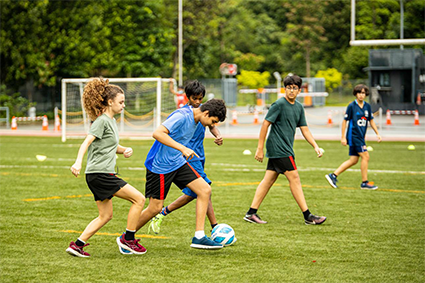
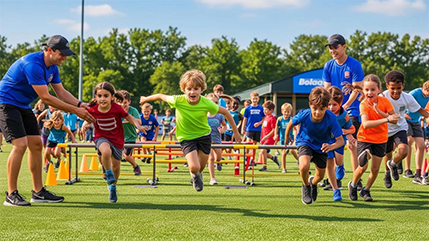
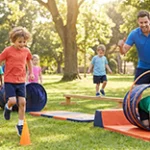
When most people observe children sprinting across a playground, executing cartwheels on a lawn, or playing catch, they simply see raw energy being spent. For decades, traditional youth physical education mirrored this casual approach—relegating youth exercise to repetitive calisthenics, rigid track laps, or early hyper-specialization in competitive sports.
However, modern pediatric exercise science reveals that structured, playful youth physical training does something far more profound than burning off sugar. It sculpts the central nervous system, fortifies skeletal architecture during critical growth windows, and critically, instills psychological resilience that shields kids against youth anxiety and depression.
"When young children learn to move their bodies with competence and confidence, they carry that exact self-assurance straight into the classroom, social circles, and future life hurdles."
The Physical vs. Psychological Dividend of Early Movement
Physical literacy operates much like learning a language. If a child doesn’t master fundamental vocabulary during formative stages, complex sentences become frustrating later. In movement terms, mastering fundamental movement skills (FMS)—squatting, lunging, hopping, bracing, throwing, and tumbling—creates a movement vocabulary that fosters lifetime confidence.
78% Higher
Self-esteem, classroom focus, and social adaptability scores recorded in youths participating in non-punitive physical training.

Beyond the muscle spindle and cardiac gains, the primary psychological dividend is self-efficacy. When an 11-year-old child attempts a balance obstacle course, falls off, adjusts their stance, and conquers it on attempt four, dopamine and neuroplastic pathways reinforce an irreplaceable lesson: temporary struggle directly produces mastery.

 3 Nov 2026